

Fix iCloud Drive not syncing Mac Issues
Restore seamless file synchronization on your macOS device.
When your iCloud Drive not syncing Mac experience becomes frustrating, with files failing to appear or download, or uploads getting stuck, it disrupts your workflow. This guide offers a comprehensive approach to troubleshoot and resolve common synchronization problems, ensuring your important documents and media are accessible across all your Apple devices. If you notice your iCloud Drive missing files, or if there’s an indication that your system is actively attempting to sync without progress, these steps can help rectify the situation.
Initial Checks for iCloud Drive not syncing Mac
Before diving into advanced troubleshooting, it’s essential to verify fundamental aspects that can impact cloud synchronization. These preliminary steps can often resolve an iCloud Drive not syncing Mac problem quickly by addressing common external factors.
1. Apple System Status and Network Connection
First, check if Apple’s iCloud services are experiencing any outages. A quick visit to the official Apple System Status page can confirm if the issue lies with their servers rather than your device. Concurrently, ensure your Mac has a stable internet connection. An unreliable or intermittent network can prevent your iCloud Drive not syncing Mac successfully. Additionally, confirm that Low Power Mode is disabled, as it can sometimes restrict background processes like syncing.

2. Verify Your iCloud Storage Space
One of the most frequent reasons for an iCloud Drive not syncing Mac problem is insufficient storage. If you have exceeded your allocated iCloud storage limit, new files will not upload, and existing data might not fully synchronize. Check your remaining iCloud storage to ensure you have adequate space. Running out of room will immediately pause any syncing activity until space is freed up or a larger plan is purchased.
Resetting iCloud Drive Sync on Your Mac
Sometimes, the simplest solution for an iCloud Drive not syncing Mac issue involves refreshing the system’s connection to the cloud service. These methods help clear temporary glitches that might be obstructing file transfers.
1. Restart Your macOS Device
A fundamental troubleshooting step for many computer issues, including an iCloud Drive not syncing Mac problem, is simply restarting the device. A full system restart can clear out temporary system files, refresh network connections, and resolve minor software conflicts that might be causing a sync backlog. After your Mac reboots, allow a few minutes for the system to re-establish its connection with iCloud Drive.
2. Toggle iCloud Drive Off and On
If a restart doesn’t fix your iCloud Drive not syncing Mac issue, try temporarily disabling and re-enabling iCloud Drive. This action forces a refresh of the synchronization process. Go into your System Settings, select your Apple ID profile, navigate to iCloud, then find iCloud Drive. Turn off the feature, wait for a brief period (a few minutes is often sufficient), and then re-enable it. This can often kickstart a stuck sync.
3. Sign Out and Back In to Your Apple ID
For persistent iCloud Drive not syncing Mac problems, a more robust reset involves signing out of your Apple ID entirely, restarting your Mac, and then signing back in. This completely resets the authentication tokens and permissions your Mac uses to communicate with iCloud services. After signing out, perform a system restart before proceeding to sign back into your Apple ID through System Settings. Be prepared to re-enter your password and potentially complete two-factor authentication.
Resolving Stuck iCloud Drive Uploads
When your Mac displays a message indicating “uploading X items” but progress is stalled, it typically points to specific files causing a bottleneck. This is a common symptom of iCloud Drive not syncing Mac.
If your iCloud sync stuck, identify the files that appear to be holding up the process. These are usually large files, corrupted items, or files with unusual characters in their names. To address this:
- Locate Problematic Files: Examine your iCloud Drive folder for any files that seem to be constantly uploading or showing an error indicator.
- Move Out of iCloud: Drag these identified files from your iCloud Drive folder to a temporary local location, such as your Desktop. This removes them from the sync queue.
- Allow Other Syncs to Complete: Wait for the remaining files in your iCloud Drive to finish syncing.
- Move Back In: Once the backlog is clear, move the problematic files back into your iCloud Drive folder. This often allows them to sync successfully on their second attempt. This process can help when iCloud stuck uploading.
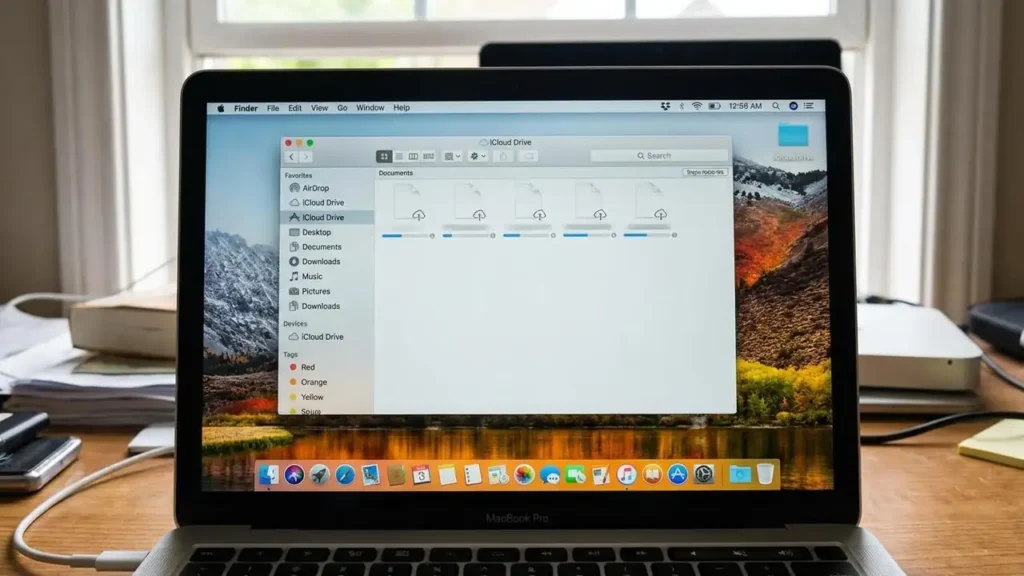
Identifying and Managing Problem Files
Dealing with specific files that prevent complete synchronization is a crucial step when your iCloud Drive not syncing Mac issue persists. Focusing on these isolated items can often clear the entire sync queue. This approach is particularly effective if you notice the system reporting a specific number of items pending upload or download, but no progress is being made, indicating iCloud files not downloading.
If your iCloud Drive missing files that you know should be present, or if uploads are simply not completing, a methodical approach to individual files is necessary. This step is about isolating the specific data causing the jam in your synchronization. By moving these particular items temporarily out of the cloud-managed directory and then reintroducing them, you can often bypass the specific glitch that was preventing their transfer. This method is a practical way to fix iCloud sync macOS when other general resets have not yielded results.
Frequently Asked Questions About iCloud Drive Sync
Successfully resolving an iCloud Drive not syncing Mac problem relies on a systematic approach. By checking the service status, confirming storage and network integrity, and performing system resets like restarting your device or toggling cloud services, you can address most synchronization failures. For stubborn issues, isolating and managing problematic files directly within your iCloud Drive folders provides a targeted solution. These steps should help restore full functionality and ensure your data remains seamlessly updated across all your Apple devices.